A Storm Is in the Forecast and You Move This Week: What We Actually Do
A storm is tracking toward Northeast Florida and your move is this week. Watches vs. warnings, evacuation zones, storage, and a 72-hour plan.
6 min read · Jacksonville, Florida
By 1st Choice Movers Team · Published
Our post on the best time to move in Jacksonville covers planning around hurricane season months ahead of time. This one is for the other situation: the move is already booked, the closing or lease date is set, and now there's a cone on the TV pointing at Northeast Florida.
This is the conversation we have with customers that week. What the forecast terms mean, how the decision gets made, what happens to your things if the date moves, and a 72-hour plan you can actually use.
The season, in plain numbers
According to NOAA's National Hurricane Center:
- The Atlantic hurricane season runs June 1 to November 30.
- The peak is September 10, and most activity falls between mid-August and mid-October.
- Based on 1991–2020, an average season brings 14 named storms, 7 hurricanes, and 3 major hurricanes.
So yes, an October or November move can still run into a storm. It isn't over until it's over.
Watches, warnings, and what they mean for moving day
The National Weather Service definitions are worth knowing, because they set the clock:
- Tropical Storm Watch: tropical storm conditions (sustained winds of 39 to 73 mph) are possible in the area within 48 hours.
- Hurricane Watch: hurricane conditions (74 mph or more) are possible. NHC issues it 48 hours before it expects tropical-storm-force winds, because preparing gets unsafe once those winds arrive.
- Tropical Storm Warning: tropical storm conditions are expected within 36 hours.
- Hurricane Warning: hurricane conditions are expected. NHC issues it 36 hours ahead of tropical-storm-force winds, and says all preparations should be complete. Evacuate right away if you're told to.
NHC puts out advisories at least every six hours (5 a.m., 11 a.m., 5 p.m., and 11 p.m. Eastern) and every three hours once coastal watches or warnings are up. In a storm week, those advisory times are when the phone rings.
Also keep in mind that the forecast cone only shows where the center of the storm is likely to go. NWS notes that a storm's effects can reach hundreds of miles, and areas outside the cone can still get tornadoes and flooding rain.
How we decide whether a move goes
Safety comes first, for your family and for our crew. In a storm week we watch the NHC advisories alongside you, and we'd rather talk early than surprise anyone the night before. If conditions make it unsafe to drive a loaded truck or carry furniture outside, the move waits. If you want to postpone, call us as soon as you know, and we'll talk through the options together.
One thing that's out of everyone's hands: evacuation orders. Duval County uses lettered evacuation zones, A through F. Per JaxReady, Zone A is the most vulnerable and is evacuated first, including manufactured and mobile homes. Evacuations widen from B toward E as storm effects intensify, and Zone F covers areas likely to flood from rainfall or other hazards. Most of the county's low-lying areas are along the coast and rivers.
Look up both addresses, the one you're leaving and the one you're moving into, on JaxReady's "Find Evacuation Zone by Address" tool or in the JaxReady app. If either one is in a zone being told to leave, the move isn't happening that day, and nobody should be loading a truck there.
Rescheduling, deposits, and what it costs you
Every mover handles weather rescheduling differently, us included, so ask before you book: What happens to my deposit if a storm moves the date? Is there a rebooking fee? How far out can we reschedule? What if I cancel outright? Get those answers on your contract, not just over the phone.
Whatever the policy, get the new plan in writing. Florida law says the estimate and contract have to include the proposed date or dates of your move, so a new date means updated paperwork. If the price changes because the plan changed (an extra day, storage, a second delivery), that change belongs in a written amendment you sign, not in a phone call.
If your closing or lease date won't move
This is the hard one. The storm may slow down, but your buyer's lender or your landlord may not. That's where storage comes in.
Option 1: Load now, store, and deliver later
If the weather window allows, the goods get loaded before the storm and held until it passes. Know what you're agreeing to:
- Florida law requires the estimate and contract to list the name, phone number, and physical address of wherever your goods will be held pending further transportation.
- If a mover puts your things in a self-storage unit owned by someone else, Florida law says the goods have to be stored in your name, and you have to contract directly with the storage facility.
- FDACS points out that storage costs extra, and every extra trip into and out of storage adds to the chance of damage.
Option 2: Move the closing, keep the crew date flexible
Sometimes the cleanest answer is a short extension on the lease or the closing. Ask early, before the whole city is asking.
If storage might be part of your plan, ask about it when you book, not the day the watch goes up. Find out where your things would be held, how they'd be protected, and what it costs, and make sure that address is on your paperwork.
Keeping a load dry in Florida rain
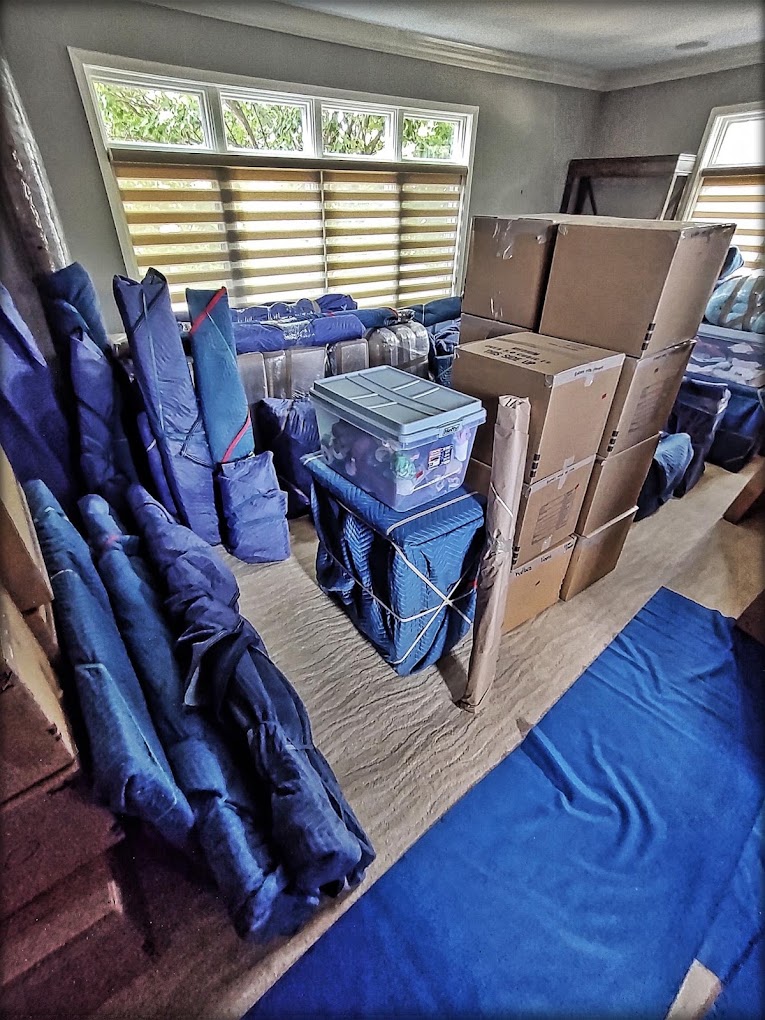
Even when a storm misses, the outer bands bring rain, and moving days in this town get wet. Our service pages already note that we shrink-wrap over pads, especially in Florida humidity. A few things you can do on your end:
- Pack paper, photos, and electronics in sealed plastic bins where you can, not open-top boxes.
- Use real moving boxes that close and seal. FDACS warns against plastic bags and boxes that can't be closed and sealed.
- Clear a dry landing zone inside the new place, like a garage or the first room past the door, so things come straight in out of the weather.
- Lay down towels and floor protection at both doors. Wet shoes on tile cause more trouble than the rain does.
What makes a storm week go better
In our experience, the customers who come through a storm week with the least stress are the ones who had a backup date in mind, knew their evacuation zones, and had the conversation with their lender or landlord early. The storm decides the weather. You can still decide most of the rest.
The 72-hour storm-week checklist
72 hours out
- [ ] Look up both addresses on JaxReady and write down the zone letters
- [ ] Call your mover and ask the plan if a watch or warning is issued
- [ ] Call your lender, title company, or landlord about a backup date
- [ ] Ask about storage, and get the storage address and terms in writing
48 hours out
- [ ] If a watch is issued, expect a decision call around the NHC advisory times
- [ ] Set aside medications, documents, chargers, and anything you'll need right away, and keep them with you (FDACS advises not packing meds or what you need the minute you arrive)
- [ ] Pack paper and electronics in sealed bins
24 hours out
- [ ] Confirm the go or no-go in writing (text or email)
- [ ] If it's a go, clear a dry landing zone at the new place and put floor protection at both doors
- [ ] If it's a no-go, confirm the new date and any storage plan in writing, and keep your copy of the contract with you
FAQ
Will movers work during a hurricane watch?
A watch means hurricane conditions are possible within about 48 hours, not that they've arrived, so some moves can still happen early in a watch. The decision depends on the forecast, both evacuation zones, and your mover's policy. Get the call in writing.
What happens to my things if the move gets postponed after loading?
They go into storage until it's safe to deliver. Florida law requires your estimate and contract to list where your goods are being held. Storage usually costs extra, so get the terms in writing.
How do I find my evacuation zone in Jacksonville?
Use JaxReady's "Find Evacuation Zone by Address" tool or the JaxReady app. Duval County uses Zones A through F, and Zone A is evacuated first.
Is October too late in the season to worry?
No. NOAA puts most Atlantic activity between mid-August and mid-October, and the season officially runs through November 30.