How to Read a Florida Moving Estimate, Line by Line
What Florida law says must be on a moving estimate: registration number, itemized costs, payment forms, 60-cents-per-pound valuation, and more.
8 min read · Jacksonville, Florida
By 1st Choice Movers Team · Published

Our red-flags post covers what to run from. This one covers what to look for. When a mover hands you an estimate in Florida, the law has a lot to say about what has to be on it. Most people never read past the total at the bottom.
We'd rather you read the whole thing, ours included. Below, we walk through a Florida moving estimate one section at a time and tie each line to what Florida's moving law, Chapter 507 of the Florida Statutes, actually requires.
First: Florida law says you get it in writing, signed, before work starts
Section 507.05 is the core of it. Before a mover provides any moving or accessorial service, it has to prepare an estimate and a contract and give them to you in writing. You, the mover, and any broker involved must sign or electronically acknowledge and date them.
That rule covers moves that start and end in Florida. Chapter 507 applies to intrastate moves and doesn't apply to shipments contracted by the U.S. government or by state or local government. Moves that cross state lines fall under federal rules, which we get to at the end.
If someone shows up and starts loading before you've signed anything, stop them right there.
The registration line, and how to check it yourself
What it should say
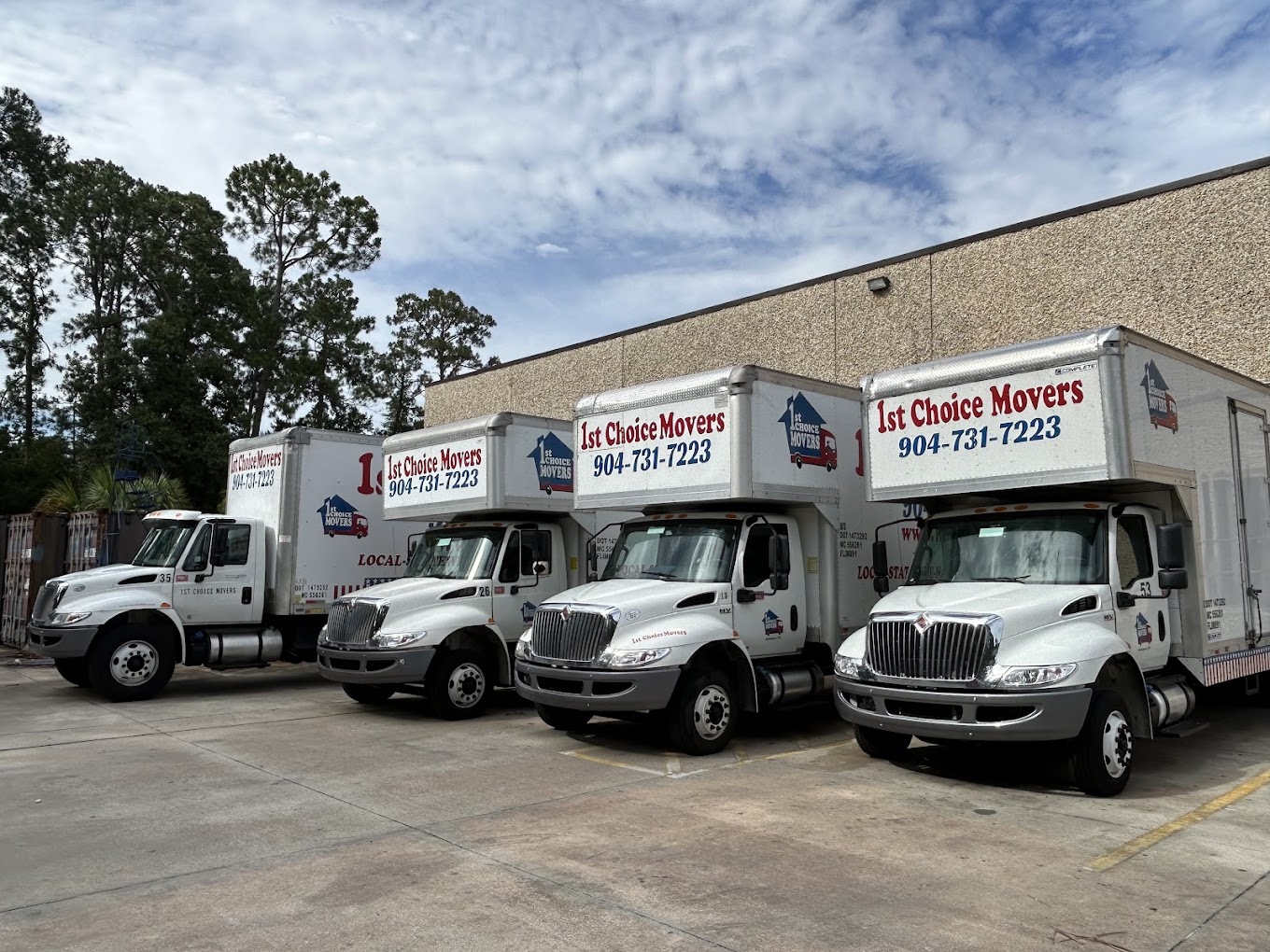
Florida requires every mover's estimate and contract to include this phrase: "(NAME OF FIRM) is registered with the State of Florida as a Mover. Fla. Mover Registration No. ___." Ads have to show "Fla. Mover Reg. No." or "Fla. IM No.," and the mover's trucks have to display one of those phrases on the driver's side door, in letters at least 1.5 inches tall.
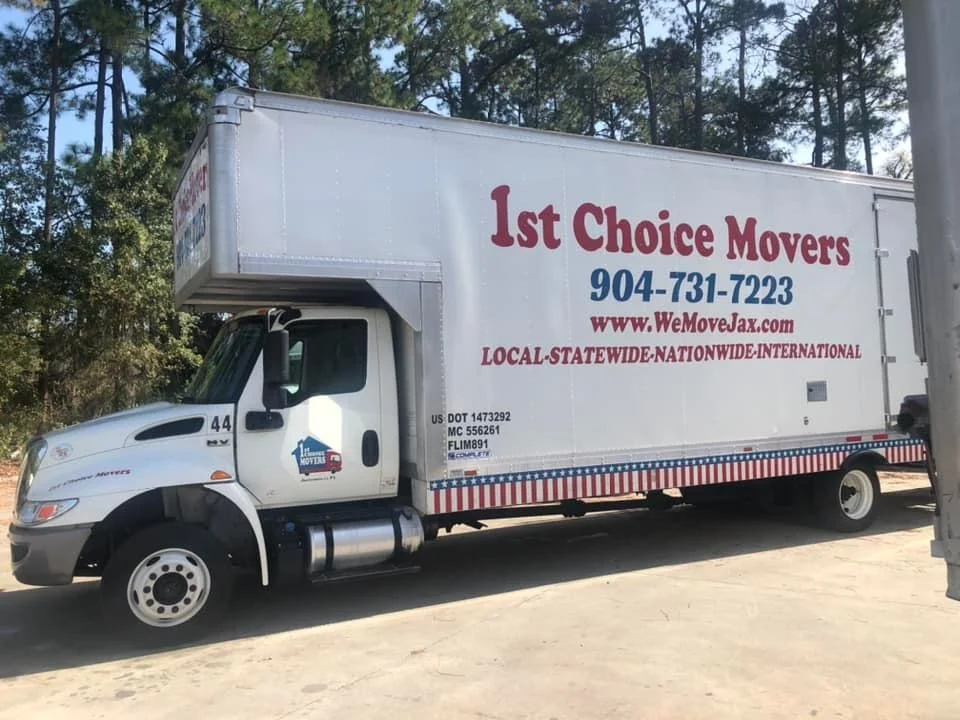
That applies to us too. Our Florida mover registration is IM #891, and our USDOT number is 1473292. You'll find both on every estimate we give you, and we'd encourage you to check them yourself.
How to check it
Don't take anyone's word for it, ours included. The Florida Department of Agriculture and Consumer Services (FDACS) says checking registration should be your first step. Use the FDACS Business License Lookup or call 1-800-HELP-FLA (435-7352). Registration is renewed every two years.
A broker is not a mover
Florida law says a moving broker can't give you a verbal estimate or prepare a written one. Only the registered mover can. Any document from a broker has to say at the top that the broker "is not a mover." If the paper in your hand says that, find out who the actual mover is and check their registration.
The who, when, and where lines
Section 507.05 lists the minimum details. Check each one:
- The mover's name, phone number, and physical address where its employees can be reached during business hours. A P.O. box alone isn't enough.
- The date the estimate was prepared and the proposed date or dates of your move: packing, loading, transport, and unloading.
- Your name and address, the pickup and delivery addresses, and a phone number where you can be reached.
- The name, phone number, and physical address of wherever your goods will be held if they aren't delivered right away. That includes any time a mover holds goods during a fee dispute.
That last line is the one people skip. It matters most when there's storage involved, or when something goes wrong.
Itemized charges: labor, truck, materials, and the extras
The law requires an itemized breakdown, description, and total of all costs and services for loading, transport, unloading, accessorial services, and storage, including any broker fees.
"Accessorial services" is the legal term for everything besides the basic load, drive, and unload. Chapter 507 lists examples:
- Valuation coverage
- A written inventory
- Equipment like dollies, hand trucks, pads, blankets, and straps
- Storage, packing, unpacking, and crating
- Hoisting or lowering
- Waiting time
- "Long carry" (carrying items an excessive distance to or from the truck)
- Overtime loading and unloading
- Disassembly and reassembly
- Elevator or stair carrying
- Servicing appliances
- Packing and crating materials
It also covers third-party services that you pay for through the mover.
FDACS adds a list of what the price itself might be based on: appliance servicing, cubic footage, hourly rates, stair or elevator charges, number of items, packing and unpacking, and long-carry charges. When you read an estimate, you should be able to point to each of those that applies and see how it's priced. If you can't tell how a number was figured, ask before you sign.
Binding, not-to-exceed, and what can change on moving day
Here's something most people don't know: Florida's statute mentions a "binding estimate" in its payment section, but it doesn't lay out binding and non-binding estimate rules the way federal law does for interstate moves. So for an in-state move, read your own estimate to see how the price works. Is it a fixed price, an hourly rate with an estimated range, or a not-to-exceed number?
A few things Florida law does make clear:
- Price changes should be on paper. The law's hostage-goods section refers to contract amendments reflecting a price adjustment signed by the shipper. If the job changes on moving day (more items, a long carry nobody mentioned, a second stop), get the change in writing and sign it before the work happens.
- Misrepresenting the price is a violation. Chapter 507 makes it a violation to misrepresent the price, size, nature, or extent of the services offered.
- Holding your goods hostage is a felony. Once law enforcement determines you've paid the amount on your written estimate or contract (plus any signed amendments), it's a third-degree felony for a mover to refuse to give your goods back. FDACS suggests keeping a copy of your contract with you during the move for exactly that reason.
- Some things can never be held back. A mover can't refuse to hand over prescription medicines or children's things, like children's furniture, clothing, and toys, under any circumstances.
In our experience, the most common reason a moving-day total changes is that the job changed: more items than were on the estimate, things that weren't packed yet, or access issues like stairs, a long carry, or an elevator nobody mentioned. The more accurate the information at the estimate stage, the closer the final bill lands to it.
Payment: the law says at least two of three forms
The estimate and contract have to clearly and conspicuously list the forms of payment the mover accepts, and a mover has to accept at least two of these three:
- Cash, cashier's check, money order, or traveler's check
- A valid personal check showing the shipper's name and address
- A valid credit card (for example, Visa or Mastercard)
A mover also can't refuse to hand over your goods because it won't accept one of the payment forms it's required to take.
Valuation: the 60-cents-per-pound default and your options
This is the line that surprises people after something gets damaged.
Florida law says a mover can't limit its liability below 60 cents per pound, per article. Here's the arithmetic: under that minimum, a 40-pound TV works out to $24, whatever you paid for it. If a mover limits its liability, it has to tell you in writing, including the rate, when the estimate and contract are signed and before any work starts. It also has to tell you about the chance to buy valuation coverage, if it offers that.
If a mover does offer valuation coverage, it has to disclose the cost, the valuation rate, and your right to turn it down, all in writing. FDACS also suggests checking your homeowners or renters policy to see whether it covers a professional move, and asking your insurer about a rider if it doesn't.
Whoever you hire, find the payment-forms line and the valuation section on the estimate before you sign, and ask about anything that isn't clear. Ours are printed on the estimate, too.
Two lines people almost never notice
- Insurance minimums. Florida requires registered movers to carry at least $10,000 per shipment in liability coverage for loss or damage caused by negligence (or a $50,000 bond or certificate of deposit for movers running two or fewer vehicles). Movers also need motor vehicle coverage that scales with truck weight: $50,000, $100,000, or $300,000 per occurrence. You can ask any mover for proof.
- Criminal-history disclosure. Chapter 507 makes it a violation for a mover to knowingly fail to tell you in writing, before the move, if a worker who will have access to your home (even just to give a quote) has been convicted of certain serious felonies listed in Florida law.
Interstate moves are a different rulebook
If your move crosses state lines, the Federal Motor Carrier Safety Administration (FMCSA) sets the rules, and the vocabulary is more precise:
- Binding estimate: you pay 100% of the estimate at delivery. If you add items or services, or something unforeseen comes up (like stairs, elevators, or a parking permit), the mover has to prepare a new binding estimate.
- Non-binding estimate: the mover can't require more than 110% of the estimate at delivery to hand over your goods. Any remaining charges get billed later (FMCSA's booklet says after 30 days).
- A "rate quote" isn't an estimate. FMCSA says the estimate should be based on an actual or virtual inspection of your goods.
For interstate moves, look up the mover's USDOT and MC numbers on FMCSA's public SAFER system, and ask for FMCSA's booklet, "Your Rights and Responsibilities When You Move."
FAQ
Does Florida require a written moving estimate?
Yes. For moves that start and end in Florida, Section 507.05 requires a written estimate and contract, signed or electronically acknowledged and dated by you and the mover, before any moving services are provided.
How do I check whether a Florida mover is registered?
Use the FDACS Business License Lookup or call 1-800-HELP-FLA (435-7352). The registration number should also be on the estimate, the contract, the mover's ads, and the driver's side door of its trucks.
What does 60 cents per pound mean on my estimate?
It's the lowest liability rate a Florida mover can set, figured per pound for each item. A 40-pound item is worth $24 at that rate. Ask what other valuation coverage the mover offers, and check your own homeowners or renters policy.
Can my moving price go up on moving day?
If the job changes, the price can change. Get any change written up as an amendment and sign it before the extra work is done. For interstate moves under a non-binding estimate, federal rules cap what you have to pay at delivery at 110% of the estimate.